
Chapter Twenty-Eight: Rathore Rituals
The sacred fire burned steadily beneath the mandap, its flames rising and falling like a silent witness to centuries of tradition in .
The priest’s chants deepened, each syllable echoing through the decorated space, binding the moment not just to the present—but to lineage.
Veeresh Rathore sat upright, composed, his sword placed beside him—never out of reach.
Because in Rathore tradition, a groom did not come empty-handed.
He came as a protector.
A man who carried not just a name…
But a duty.
The priest guided him through the kuldevta vandana first.
An invocation to the family deity.
Not merely a ritual—but an acknowledgment.
A silent declaration that the groom stood not alone, but as part of a lineage that watched, protected, and judged.
Veeresh followed each instruction without hesitation.
Offering flowers.
Touching the sacred thread.
Lowering his head—not in submission, but in respect.
Next came the raj tilak ritual.
A small mark of vermilion was placed on his forehead by the elder of the family.
A reminder—
That even in marriage, he remained the heir.
The one who would carry forward the Rathore legacy.
There was no cheer.
No unnecessary celebration in that moment.
Only pride.
Quiet.
Steady.
The priest then instructed him to place his hand near the sacred fire.
The agni sakshi sankalp.
A vow taken before fire—not spoken loudly, but understood deeply.
The fire was witness.
And in Rathore belief—
Fire did not forget.
Veeresh’s gaze remained unwavering as he followed through.
No distraction.
No restlessness.
Because this—
This was not something he would ever take lightly.
The sound of the priest’s voice shifted slightly.
“Vadhu ko bulao.”
The words carried across the mandap.
And then—
She arrived.
Not alone.
Gayathri.
Ravi.
The two who had stood beside her long before any ritual, any name, any acceptance.
They held her hands—not as a formality…
But as something far more real.
Veeresh’s gaze lifted briefly.
Not lingering.
But enough to acknowledge.
She sat beside him.
Not hesitant.
Not fragile.
But composed in her own quiet way.
The priest resumed.
The Rathore rituals did not change for anyone.
They remained as they were—structured, precise, rooted in something older than personal stories.
Poornima followed as instructed.
Her movements steady.
Her focus clear.
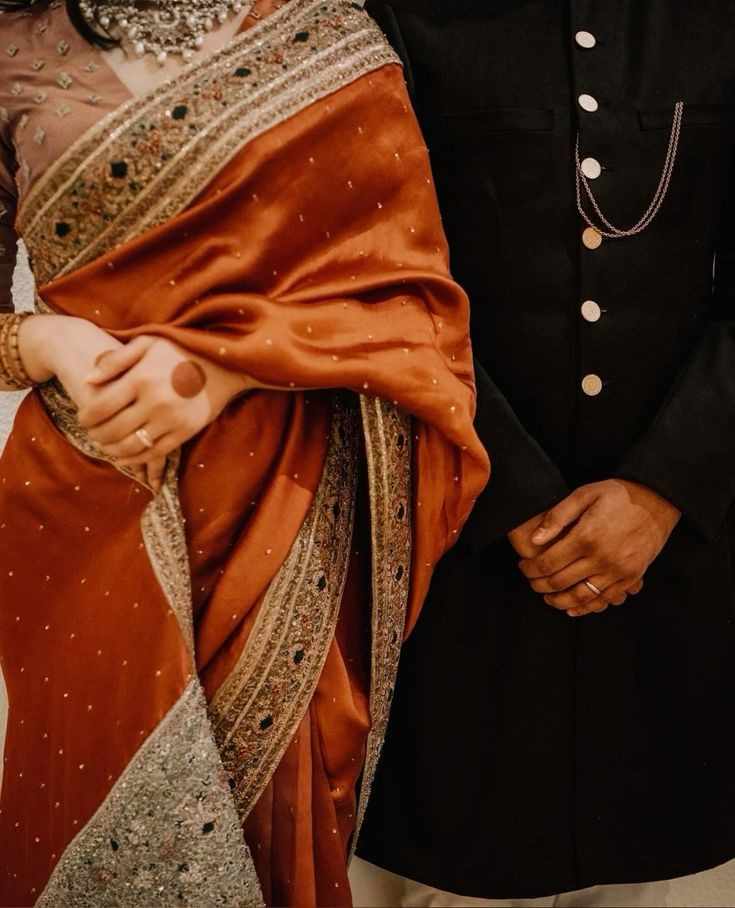
The hasta milap was guided—not as a union of emotion, but as a formal joining under tradition.
Their hands placed together, bound lightly with sacred thread.
Not tightly.
Not forcefully.
Just enough to signify connection.
Veeresh didn’t look at her.
Not fully.
But he didn’t pull away either.
The priest continued with offerings to the sacred fire.
Each step measured.
Each chant deliberate.
Poornima mirrored every instruction.
Without confusion.
Without delay.
Because she wasn’t unfamiliar with tradition.
She just hadn’t been given a place in it before.
And now—
She sat there.
Inside it.
Not questioned.
Not excluded.
Included.
The fire crackled softly between them.
The chants continued.
The rituals moved forward—unchanged, unbroken.
Because Rathore traditions did not bend.
They endured.
And now—
So did they.















Write a comment ...